Car profile — 2026 season
Red Bull RB22.
Red Bull's all-or-nothing leap into F1's 2026 reset: the first Milton Keynes car powered by an in-house Red Bull Ford engine, wrapped in a glossy heritage-blue throwback to the team's 2005 debut.
A leap with no safety net
No team had more to lose in Formula 1's 2026 reset than Red Bull Racing, and none gambled harder. The RB22 is the first Milton Keynes car to carry an engine the team built itself, the Red Bull Ford DM01, and it arrives at the very moment the sport tore up its rulebook: smaller and lighter cars, active aerodynamics front and rear, a 1.6-litre V6 turbo-hybrid split roughly 50/50 between combustion and electrical power, the MGU-H deleted, the MGU-K uprated to around 350 kW, and 100% sustainable fuel 135. After a dynasty built on Honda power and Adrian Newey's aero genius, Red Bull entered the new era having lost the great designer to Aston Martin and Christian Horner's long reign, with Laurent Mekies installed as CEO and team principal and Pierre Waché's engineering group carrying the technical weight 46.
The Ford era begins
The headline of the RB22 is what sits behind the driver. When Honda confirmed its 2026 exit, Red Bull chose not to become a customer but to stand up Red Bull Powertrains from a bare field in Milton Keynes, recruiting Mercedes engine man Ben Hodgkinson to lead it and signing Ford as a strategic partner for battery-cell, electric-motor, control-software and energy-recovery expertise 35. The result is the DM01, launched on 15 January 2026 at Ford's Michigan Central campus in Detroit and named in tribute to late co-founder Dietrich Mateschitz 12. Pre-season performance indexing, which under the 2026 rules focuses on the internal-combustion side rather than the whole unit, repeatedly placed the Red Bull Ford engine among the strongest, a remarkable claim for a first-time manufacturer 5. Whether the rest of the package could match that promise was the season's open question.
“No team had more to lose in Formula 1's 2026 reset than Red Bull Racing, and none gambled harder.”
Designing for the smaller-car rules
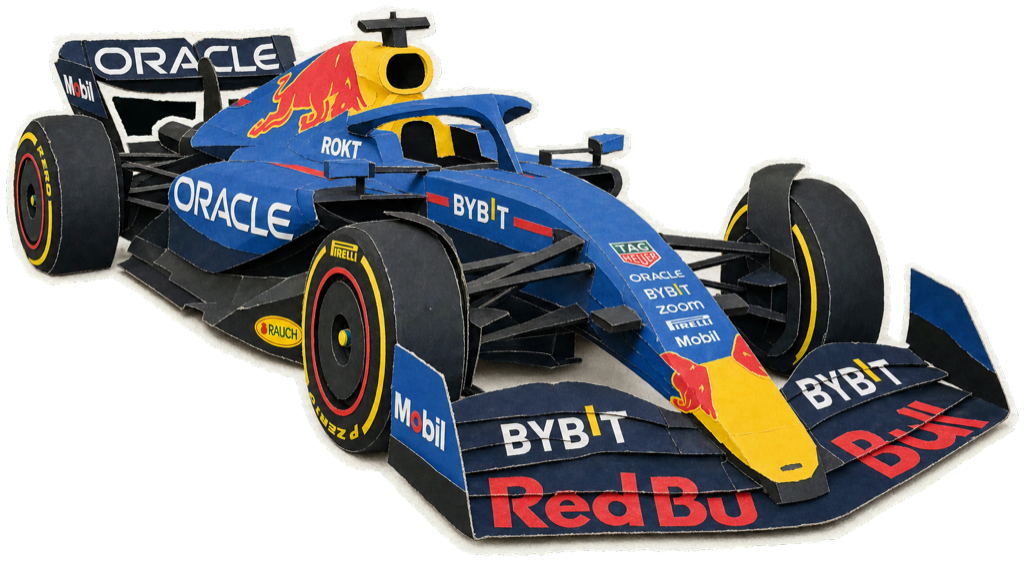
Built to the most sweeping aerodynamic reset in a generation, the RB22 is around 30 kg lighter and 100 mm narrower than the RB21, with maximum width cut to 1900 mm, wheelbase capped at 3400 mm, and a 768 kg minimum weight including driver 1. With DRS gone, the car runs fully active front and rear wings, switching between a high-downforce "Z-mode" for corners and a low-drag "X-mode" on the straights to recover the downforce sacrificed to the smaller footprint 1. Waché's team kept Red Bull's signature pull-rod front suspension and a push-rod rear, the lower nose sculpted to drive air into the undercut beneath the sidepods, where the floor does most of the work 17. The power is fed through a Red Bull Technology eight-speed gearbox, with carbon-carbon Brembo brakes and Pirelli's narrower 18-inch tyres completing the package 8.
A borrowed idea
For a team used to setting the template, the most striking design note was that Red Bull, by its own development path, started borrowing from a rival. Giorgio Piola's analysis traced a concept shift away from Red Bull's familiar inwash philosophy toward a small Ferrari-style "bathtub" gully along the top of the sidepods, with extra volume low down to push the front-tyre wake away from the rear 7. By the Austrian Grand Prix the team had landed a sweeping upgrade, redesigned bargeboard cascades, reshaped sidepods with more lower-body volume, a revised floor ahead of the rear wheels with an additional slot, and a tweaked exhaust appendage, all aimed at reducing the car's sensitivity to ride-height changes and broadening its operating window 7.
A glossy throwback
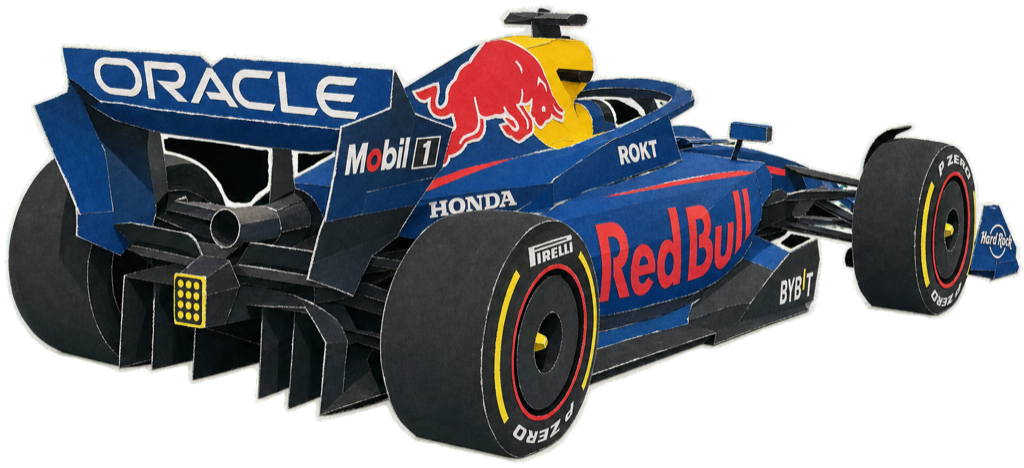
Visually the RB22 marks a clean break. After years of matte finishes, Red Bull returned to a glossy "heritage" blue over a white base, the colours saturated and the sun-and-bull logo crisp, with a subtle woven jacquard pattern running through the bodywork that shifts as light moves across it, a deliberate echo of the team's 2005 debut look 19. Oracle remains title sponsor, and the reveal stunt in Detroit deliberately tied the new visual identity to the Ford engine partnership 29.
How the season went
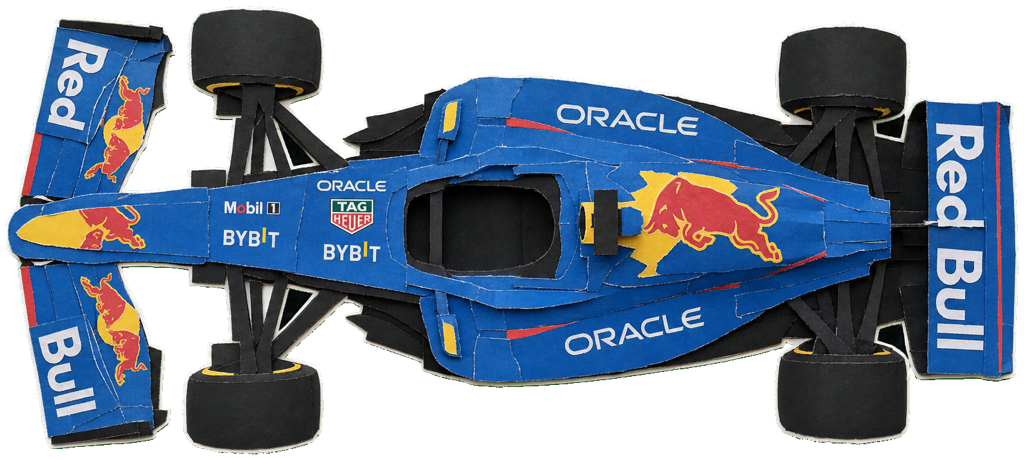
The early reality was harder than the engine hype suggested. Verstappen, stripped of the #1 he lost to 2025 champion Lando Norris and now racing under #3, crashed in Q1 on debut in Australia and recovered only to sixth, and Mekies admitted the RB22 had "significant shortcomings" amid reliability trouble that hit both cars 4610. New signing Isack Hadjar, promoted from Racing Bulls to replace Yuki Tsunoda, announced himself with a sensational third on the grid in Australia before an engine failure ended his run around lap 11 6. The car steadily came good: Verstappen claimed a first podium of the year with third at Bahrain, where Hadjar took a strong fifth, and the Austrian upgrade lifted Verstappen to second behind George Russell, Red Bull's best result of the campaign and a sign the gamble might yet pay off 46.
Where it sits
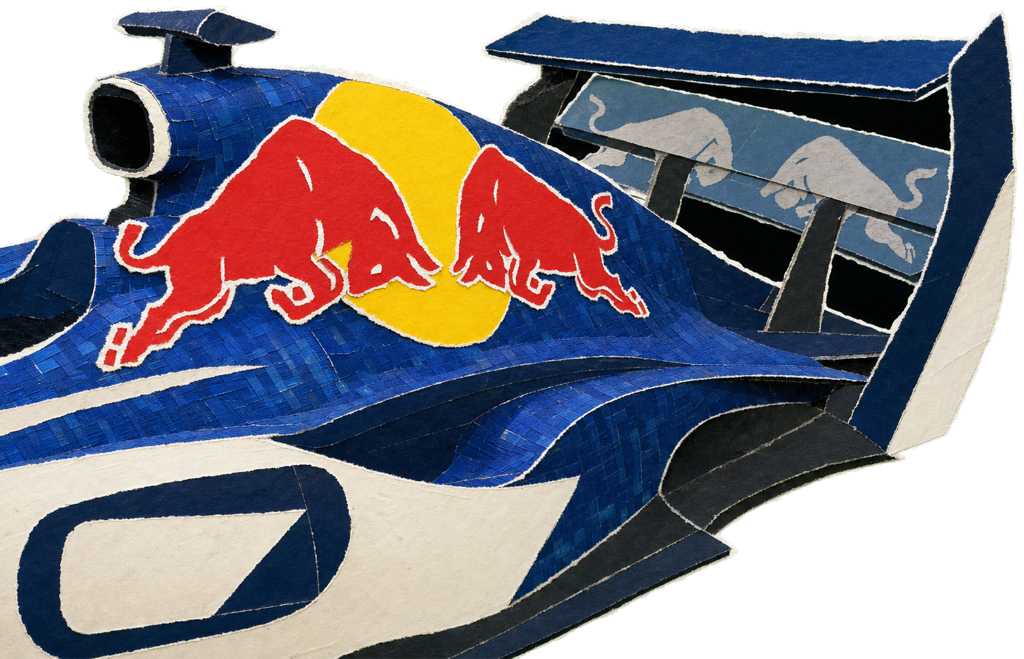
The RB22 is the bravest car on the 2026 grid: a team rebuilding its leadership, its engine programme and its aero philosophy all at once. Early in the season it was not the dominant force Red Bull had been, but a strong engine, a rapidly improving chassis and the sport's best driver kept it firmly in the conversation as the new rules settled.
Key innovations
Designers & engineers
Sources & further reading
- Red Bull Racing RB22 — Wikipedia
- Red Bull unveils 2026 RB22 and DM01 power unit at Detroit season launch — Motorsports Media
- Red Bull Powertrains — Wikipedia
- Verstappen reflects on 'extremely positive' Austrian GP — Red Bull's best result of 2026 — Formula1.com
- Shock as Red Bull F1 2026 engine named FIA benchmark in ADUO rankings — PlanetF1
- Red Bull admit to 'significant shortcomings' with 2026 car after Chinese GP struggles — Sky Sports
- F1, Red Bull RB22 Update: a technical revolution in Spielberg — Giorgio Piola Design
- F1's 2026 liveries and tech-spec round-up — Race Tech Magazine
- FIRST LOOK: Red Bull unveil striking new livery for 2026 F1 season in Detroit — Formula1.com
- Max Verstappen reveals new car number for 2026 after losing No 1 to Lando Norris — Sky Sports
Car renders are interpretive illustrations created for EXPO KINETIC, not photographs — approximate, for editorial use, not technical reference.