Cars › Racing Bulls › VCARB 03
Car profile — 2026 season
Racing Bulls VCARB 03.
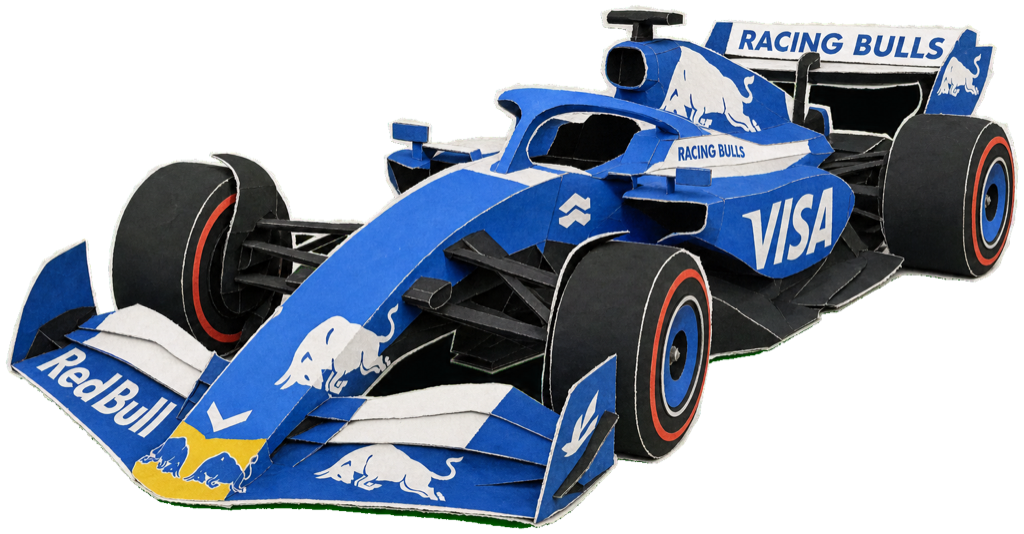
Faenza's plucky midfield outfit opens F1's hybrid revolution with its first Ford-branded engine in two decades and a hooded airbox unlike anything else on the grid.
A small team at the front of a giant reset
For 2026, no car on the grid carried more change per kilogram than the Racing Bulls VCARB 03. Formula 1's biggest regulatory reset in a generation arrived all at once — narrower 1,900mm bodies, a ~30kg lighter 768kg minimum weight, active front and rear wings, and a 1.6-litre V6 hybrid that ditches the MGU-H and pushes electrical power toward roughly half the total output on 100% sustainable fuel. 6 Layered on top of that, Faenza's team faced its own once-in-a-generation engine change: after years of Honda power, the VCARB 03 became the first Red Bull junior-team car to carry a Red Bull Ford Powertrains engine — the marque's first as a manufacturer, and the first Ford-branded F1 unit since Minardi's PS04B in 2004. 12
The brief: do more with a new everything
The concept the team chased was straightforward to state and brutal to execute — a compact, light, reliable platform that could survive the chaos of a rules reset and still bank midfield points. Reliability was treated as a weapon as much as raw pace, and in the early rounds it paid off: both cars finished essentially every Grand Prix, a record few midfield teams matched in the opening flush of the new era. 7
“For 2026, no car on the grid carried more change per kilogram than the Racing Bulls VCARB 03.”
The VCARB 03's foundations were laid by long-serving technical director Jody Egginton before he departed to become engineering director at Red Bull Advanced Technologies, leaving the design and development to be carried by chief technical officer Tim Goss alongside deputy technical directors Guillaume Cattelani and Andrea Landi, chief designer Paolo Marabini and head of aerodynamics Guru Johl. 14 The technical-director chair stayed vacant for roughly a year until Dan Fallows — a 15-year Red Bull aerodynamics veteran returning from Aston Martin — joined in April 2026, reporting to Goss with responsibility for design, aerodynamics and performance across the team. 4 Overseeing it all from the pit wall is team principal Alan Permane, who stepped up from Renault/Alpine engineering when Laurent Mekies left for Red Bull Racing, working under CEO Peter Bayer. 5
The engineering story: cooling a brand-new engine
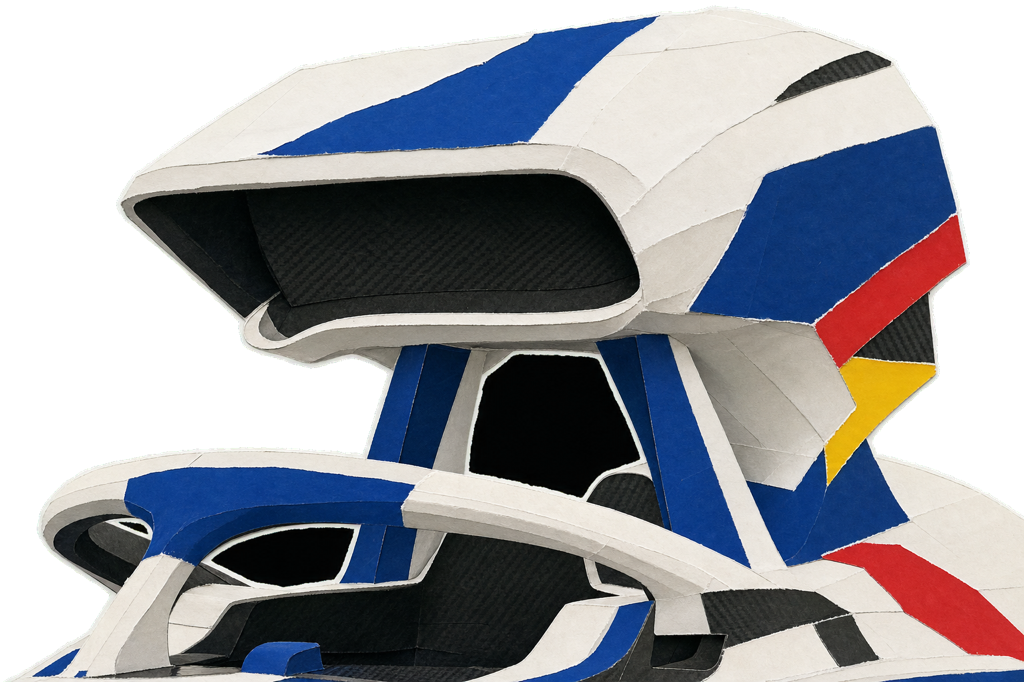
The single hardest problem on any 2026 car was packaging an unfamiliar power unit, and the VCARB 03 wore its answer where everyone could see it. Its airbox is the most distinctive on the grid: a much larger, hooded intake whose deep upper lip overhangs a recessed lower lip, braced by a pair of legs running back to the cockpit. The shape is a deliberate attempt to recover the airflow energy spilled behind the Halo and the driver's helmet, and to split cooling duties — centreline air feeds the hybrid system while the internal-combustion engine leans on heat exchangers in the sidepods. 3
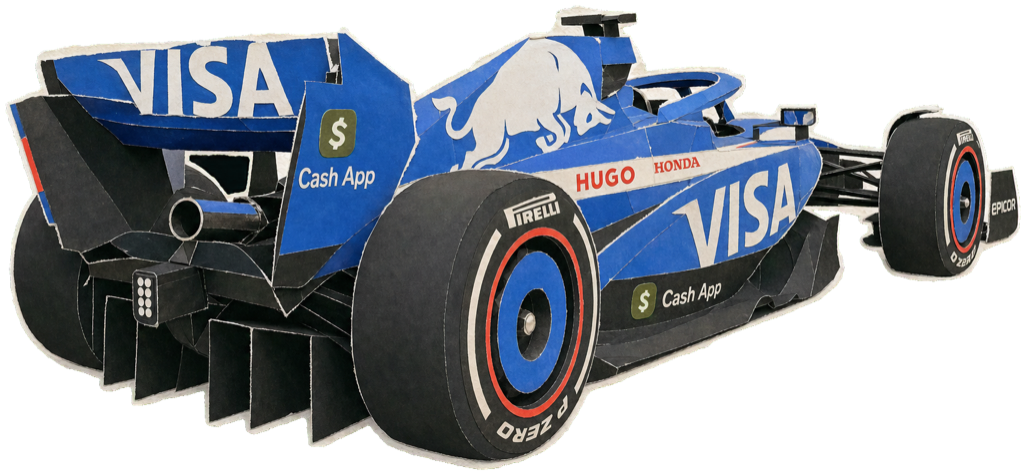
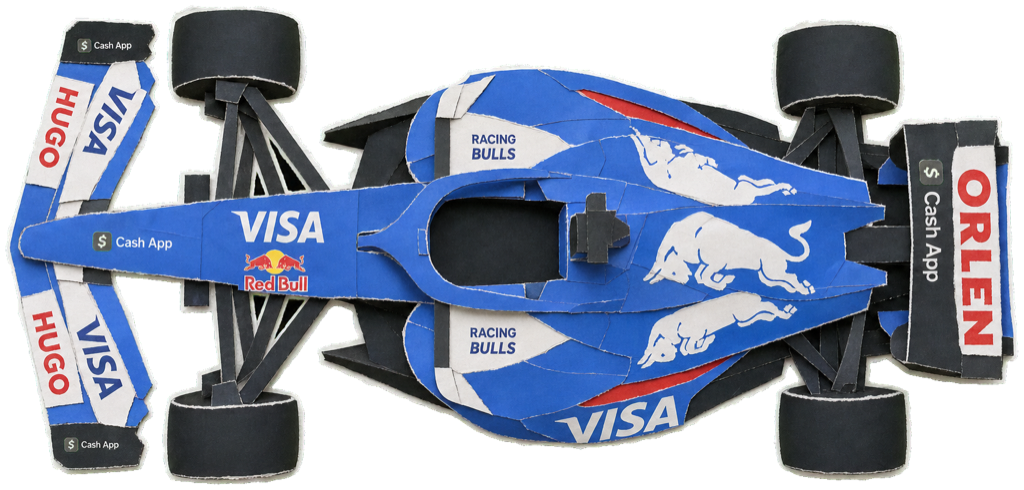
That redistribution rippled through the bodywork. The sidepod inlets were redrawn with a shallower inboard "letterbox" and a more open shoulder corner, freeing a stronger undercut and cleaner flow down the body. The mirrors were simplified from the slat-style render concept to a conventional housing with an elongated outboard vane, and the front wing gained more robust pylon mounting plus a vertical vane on the footplate to better steer pressure and airflow. Mechanically, the car confirmed a pushrod-pushrod suspension layout front and rear — a considered choice as teams re-optimised their platforms around the lighter, shorter, active-aero cars. 3 Like every 2026 machine, its wings flip between a high-downforce "Z-mode" through corners and a low-drag "X-mode" on the straights, replacing DRS. 6
Who drove it, and how it went
The line-up paired continuity with youth. Liam Lawson, the New Zealander rebuilding his reputation after being dropped by the senior Red Bull squad early in 2025, was the steady hand and the team's leading scorer in the opening rounds — banking points in the China sprint and Grand Prix and again in Japan. 7 Alongside him, 18-year-old Briton Arvid Lindblad arrived as the grid's only rookie, promoted from Formula 2 through the Red Bull Junior programme, carrying the rare number 41 — last raced in 1980 — for its echo of his initials. 89
Lindblad announced himself immediately, scoring on debut in Australia and reaching Q3 there. 7 Through the European rounds the partnership clicked: double-points finishes at Monaco, then a third consecutive double score in Austria where Lawson came home ninth and Lindblad tenth, the New Zealander overcoming a suspected brake fire to become the first Kiwi since Denny Hulme in 1973 to score in four straight weekends. 10 One persistent weakness emerged — the Red Bull Ford unit's launch performance lagged the Ferrari-powered runners off the line, an obvious development target. 7
Where it sits
In a tightly packed midfield, the VCARB 03 established itself as a consistent points threat rather than a podium car — running close to its senior sister team in the early standings and trading on reliability, qualifying pace and two drivers extracting maximum value from a clean, clever package. For a small team navigating the sport's biggest reset and a brand-new engine partner simultaneously, that was a credible opening chapter.
Key innovations
Designers & engineers
Sources & further reading
- Racing Bulls VCARB 03 — Wikipedia
- First images of 2026 Racing Bulls revealed from Imola shakedown — The Race
- F1 2026 uncovered: Racing Bulls VCARB03 demo reveals extra details of new cars — PlanetF1
- Racing Bulls brings ex-Aston Martin tech chief back to Red Bull fold — The Race
- Who is Alan Permane? Everything you need to know about the newest team boss — Formula1.com
- 2026 F1 regulations: smaller cars, active aero and new hybrid power units — Formula1.com
- The state of play at Racing Bulls after three rounds of the 2026 season — Formula1.com
- Arvid Lindblad set to race under car number 41 in upcoming rookie season — Formula1.com
- FIA confirms 2026 F1 entry list with Lindblad reviving number last raced in 1980 — RaceFans
- F1 news: Liam Lawson extends historic points run in Austria — Speedcafe
Car renders are interpretive illustrations created for EXPO KINETIC, not photographs — approximate, for editorial use, not technical reference.